
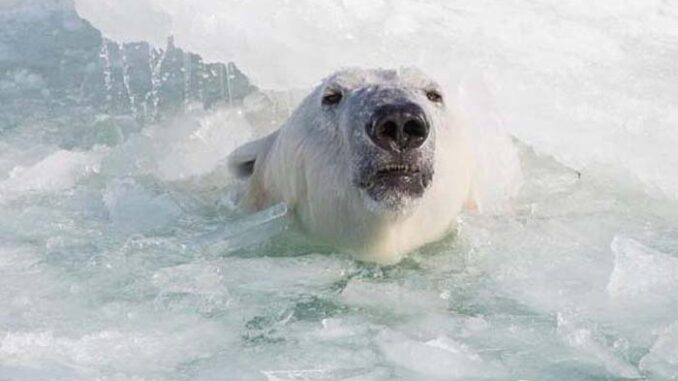
1.4.2026 – Source: Ranua Wildlife Park
🐻❄️🐻 In honor of the Bear Day on the 23rd of March – 5 facts about brown and polar bears:
❄️ Same family
Polar bears evolved from brown bears surprisingly recently, around 500,000 years ago. They are the youngest bear species in the world.
🧬 They can interbreed
Although very rare, brown bears and polar bears can produce fertile offspring. These hybrids inherit traits from both, but don’t really adapt to either of the environments.
Malla

🦭 An Arctic specialist
Polar bears have evolved a longer neck, shorter and thicker claws, and a larger gap between canines and molars – all adaptations for efficiently hunting seals.
Venus

🍽️ Different temperaments
Both are mostly solitary, but polar bears are less territorial. A single brown bear has been observed driving even 12 polar bears away from a carcass.
🌍 Same origin – different future
Brown bears are globally a species of least concern, while polar bears depend on sea ice and are therefore vulnerable. However, their future can still be influenced – every action matters, and no effort for nature is too small.
Have a beary fun day!
🐾 Which one is yawning here: an American mink or a European mink?
Facial colouring helps tell the species apart: the European mink has white on both the upper and lower lips, while the American mink usually has white only on the lower jaw.
A week ago it was still snowing, but the musk oxen didn’t mind at all. Henrik enjoyed his lichen meal from spruce branches, while the others wandered around the enclosure searching for treats scattered on the ground. ❄️🌿

🐾 Does this look familiar?
The lynx belongs to the cat family, and its grooming habits are very similar to those of domestic cats.

It’s hard not to smile at these boys 💛
Young kulan stallions test their strength and skills. This kind of playful sparring is a natural part of the species’ development and helps prepare them for the social and physical demands of adulthood.
🐾 Finland is home to four large predators – brown bear, wolf, lynx and wolverine. All stand at the top of the food chain – yet each is built in a different way.
One paw carries its owner across long distances. Another spreads wide like a snowshoe. One digs with strong paws and another moves almost silently.
The same landscape – but very different ways to move and survive.


Ranua’s Arctic Wildlife Park❄️🐾
Our animals live in spacious forest enclosures that resemble their natural homes. They sometimes like to hide, rest, or play. 💙 So take your time, be patient, and enjoy watching them in action.🐾
Dear Mervi!
Even though spring is steadily arriving all around us, it’s still nice to look at pictures of happy animals in the snow.
I especially liked the brown bear in the tree, just hanging out, and I was fascinated by the comparison of the different paws and claws — the bear’s dwarf or hobbit-like feet particularly touched me.
Thanks also for the comparison of polar bears and brown bears on Bear Day, the many interesting facts, and the nice videos of the other animals!
Hugs
Anke
Dear Mervi!
Thank you for the news from Ranua.
There are still enough snow in Ranua. I like Malla on the tree.
Hugs
Ludmila
Während wir uns hierzulande schon auf den Frühling einstellen, senden uns die Tiere, allen voran der Braunbär und die Eisbärin Venus aus dem Ranua Ressort zum Weltbärentag noch einmal
winterliche Grüße aus dem verschneiten Finnland…
Vielen Dank für den informativen Bericht sowie die schönen Fotos und Videos !!❄👍❄👌❄😊🐇🌤
Es sieht noch sehr winterlich aus in Ranua.
🙂 Aber auch dort wird der Frühling bald
Einzug halten: die Tiere sind schon munter.